How Designers Actually Think About Window Treatments
When people think about designing a home, window treatments are often considered one of the final decisions — something to choose once the furniture is in place and the room is nearly complete.
In reality, window treatments play a much larger role in shaping the atmosphere of a home. They influence how light enters a space, how architecture is perceived, and how comfortable a room feels day to day. When thoughtfully designed, they bring softness, balance, and cohesion to an interior.
Recently, while preparing a comprehensive window treatment presentation for one of our projects, I was reminded just how many decisions go into creating a thoughtful and cohesive approach throughout a home. Window treatments are never simply about covering a window — they are about balancing beauty, comfort, functionality, and architecture while supporting how each space will be used.
Below are a few of the key considerations that guide our process when designing window treatments for a home.
1. Start With How the Room Is Used
One of the most important questions we ask is simple: how will this room be lived in?
Every space has different needs, and the window treatment strategy should respond accordingly.
In spaces designed for relaxation — such as bedrooms — privacy and light control become especially important. Blackout lining or layered treatments can help create a restful environment for sleep.
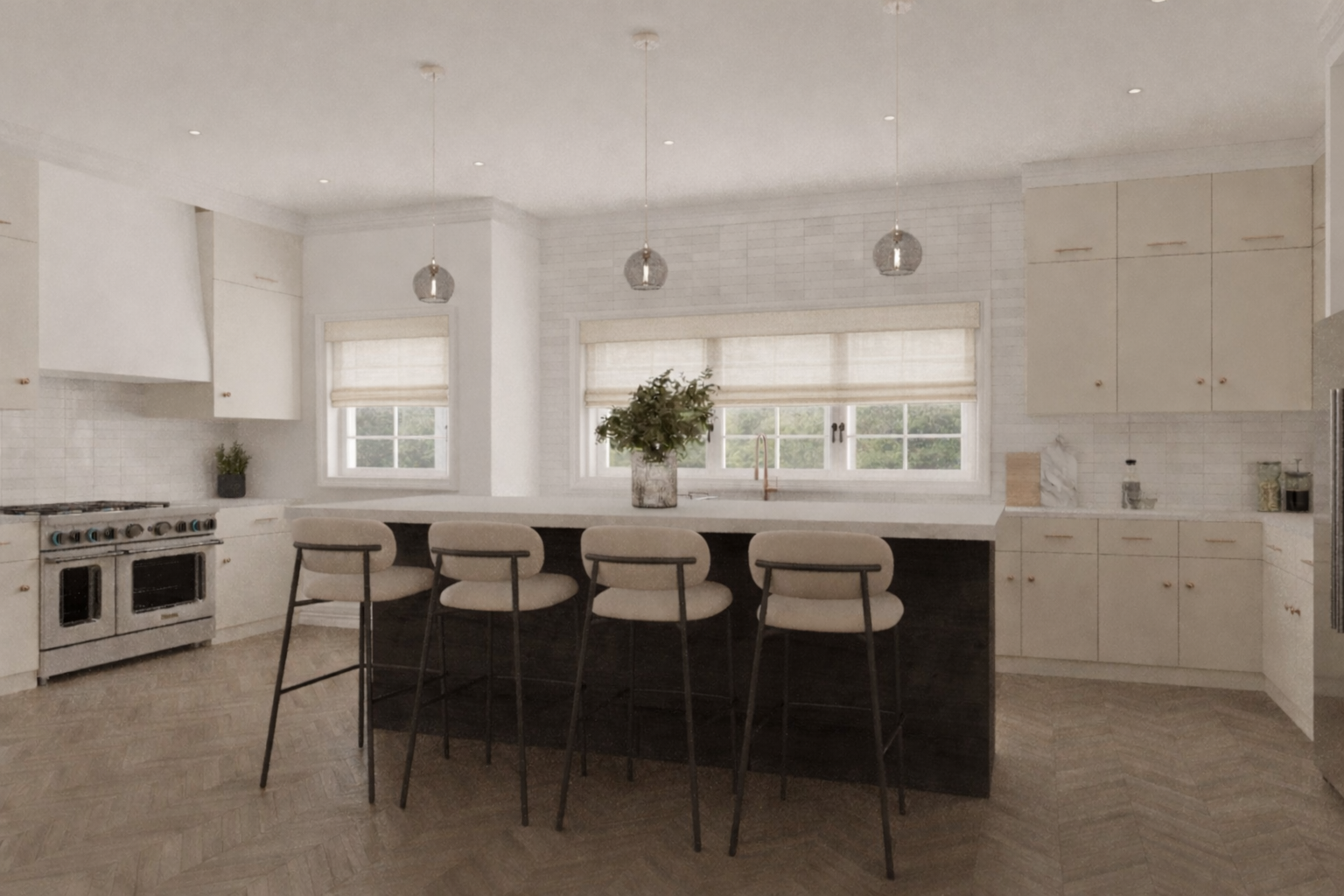
In hardworking spaces like kitchens or mudrooms, simplicity and practicality often guide the decision. In these areas, streamlined roller shades can provide privacy and gentle light filtering while maintaining a clean, unobtrusive look.
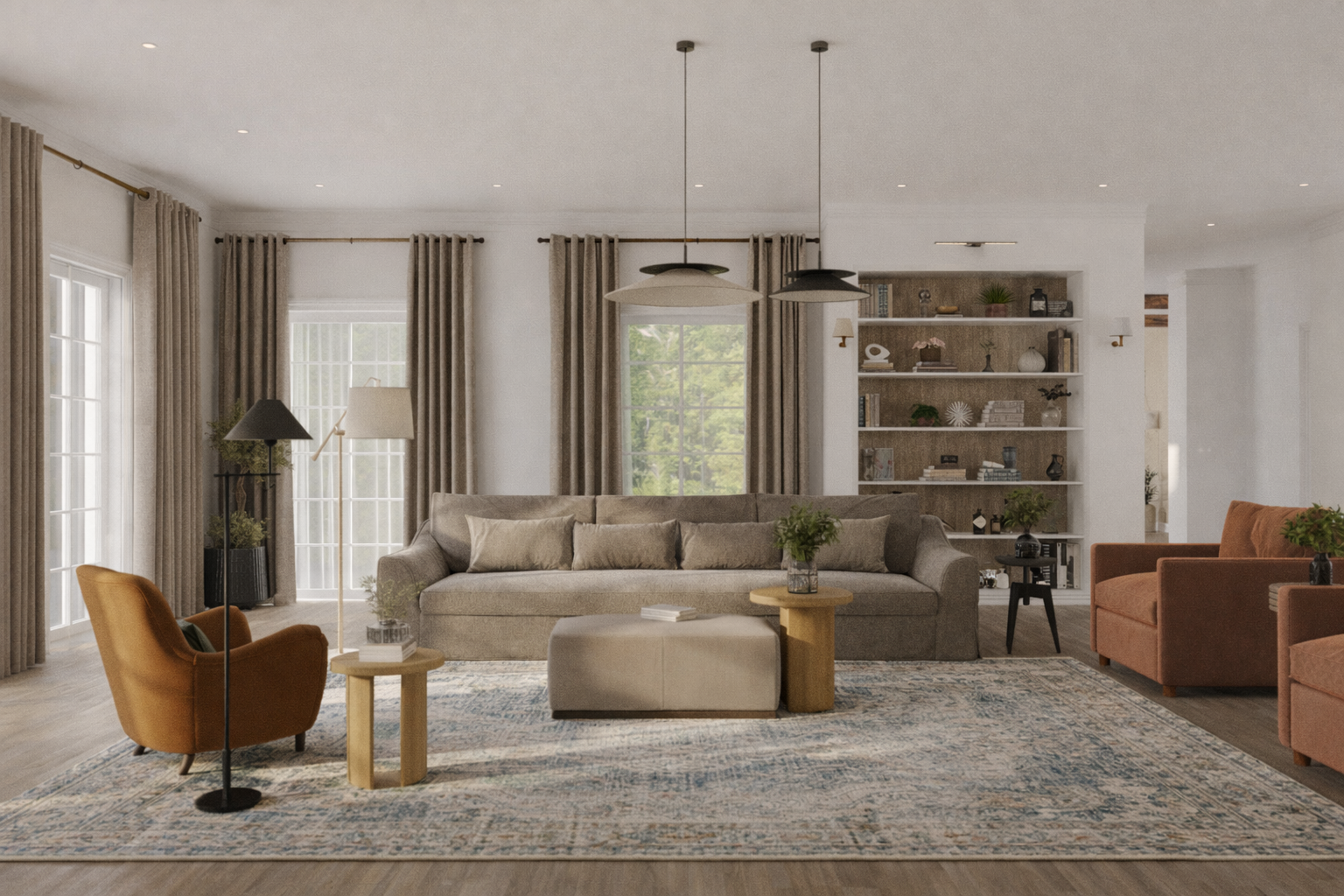
Rooms designed for gathering, such as living rooms and dining rooms, offer an opportunity to introduce more softness and visual warmth through drapery panels that frame windows and allow natural light to filter through.
When each room is approached individually, the home begins to feel both thoughtful and intuitive.
2. Window Treatments Soften Architecture
Most homes are composed of hard surfaces — wood floors, plaster walls, tile, glass, and stone. Window treatments introduce an important counterbalance.
Soft fabrics add texture and movement to a space, helping rooms feel warmer and more inviting. Drapery panels in particular can soften strong architectural lines and bring a sense of quiet elegance to a room.
Even tailored treatments such as Roman shades contribute to this effect. Their subtle folds introduce softness while maintaining a clean, architectural appearance.
When thoughtfully chosen, window treatments become an extension of the architecture rather than something that simply sits on top of it.
3. Layering Creates Depth
Some of the most beautiful interiors rely on layered window treatments.
This might include combinations such as:
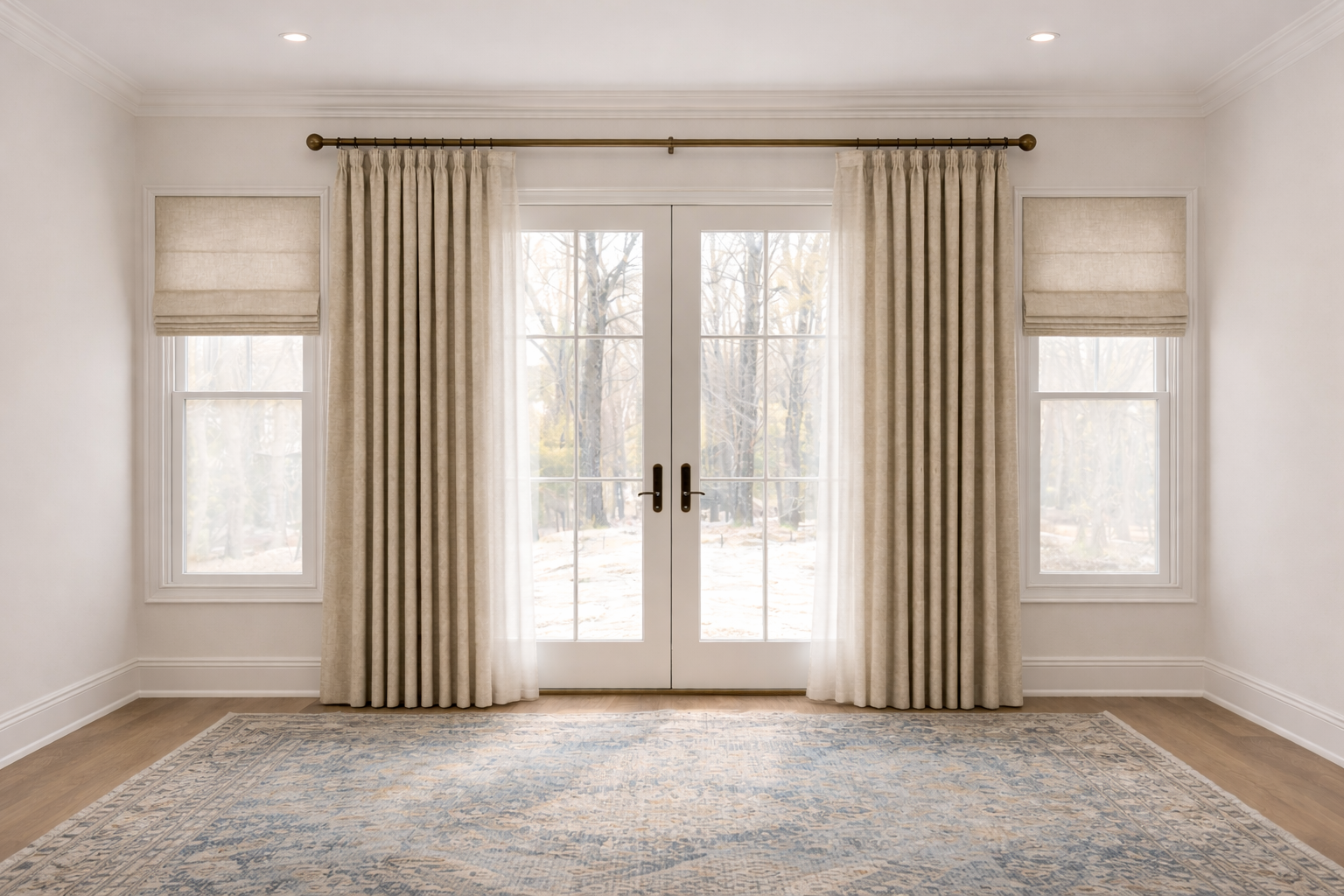
• Roman shades paired with drapery panels
• Sheer curtains layered beneath heavier drapes
• Blackout lining added behind decorative fabrics
Layering allows a room to adapt throughout the day — filtering light in the morning, providing privacy in the evening, and creating a more cocooned atmosphere when desired.
Beyond functionality, layers add visual depth and richness that a single treatment alone cannot achieve.
4. Not Every Window Needs the Same Solution
One of the most common misconceptions about window treatments is that they should all match throughout a home.
In reality, the most successful homes use a range of treatments, each chosen to suit the architecture and function of the space.
For example:
• Large living room windows may be framed with drapery panels
• Kitchen windows often benefit from simple roller shades
• Bathrooms typically require privacy while still allowing natural light
• Bedrooms often combine shades and drapery for flexibility
While the treatments themselves may vary, the goal is to create a cohesive feeling across the home through thoughtful fabric selections, colors, and proportions.
5. Fabric Changes the Quality of Light
Fabric is one of the most important — and often overlooked — decisions when selecting window treatments.
Different materials interact with light in different ways.
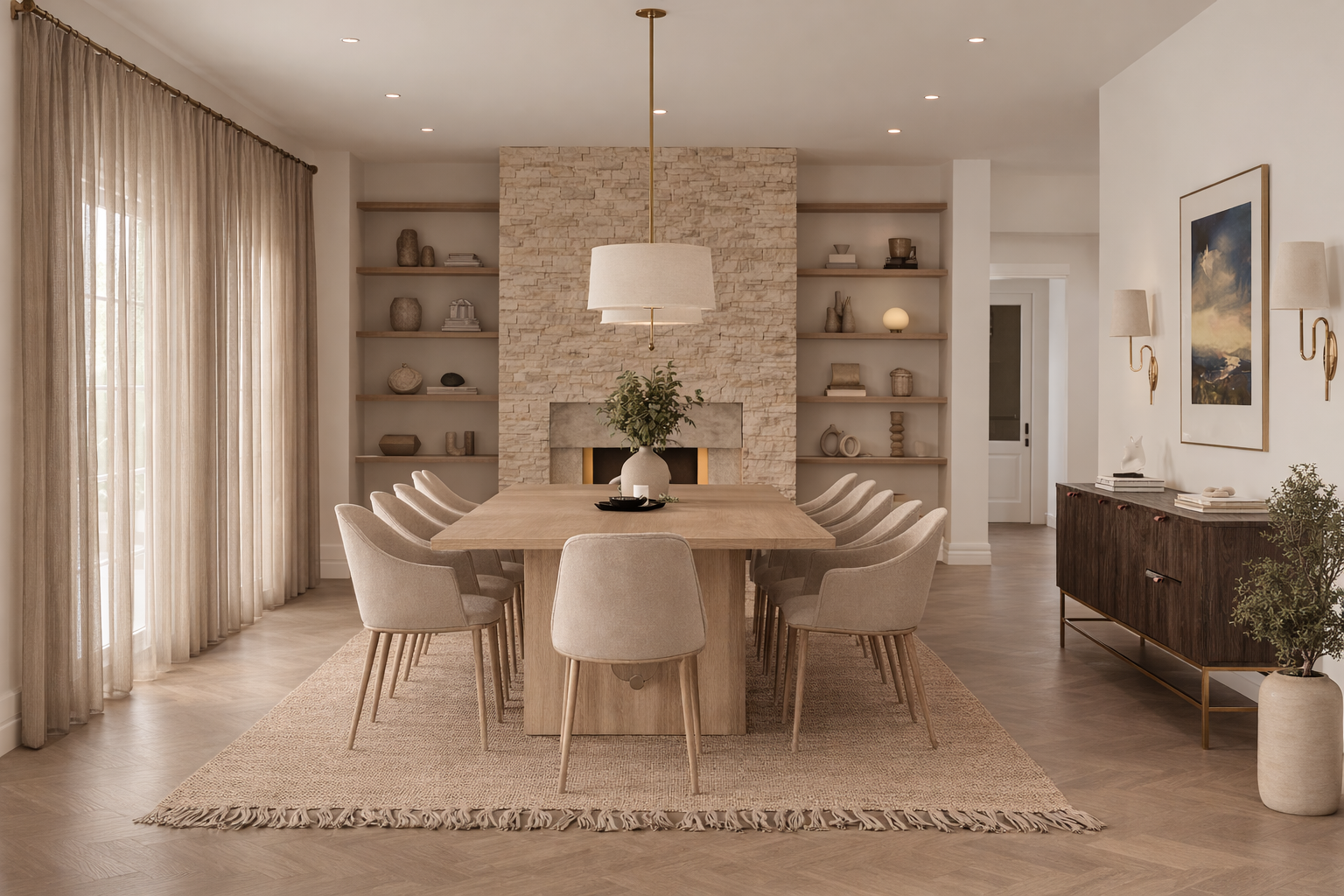
Linen, for example, allows light to filter through softly, creating a relaxed and natural glow within a room. Semi-sheer fabrics can diffuse sunlight beautifully, softening bright exposures without completely blocking daylight.
In bedrooms, blackout lining is often used to create a darker, more restful environment while still maintaining a tailored appearance.
Choosing the right fabric ensures that natural light enhances the atmosphere of a space rather than overpowering it.
6. Placement and Proportion Matter
Small technical decisions can dramatically affect how a window — and the room around it — feels.
Mounting treatments higher on the wall can visually increase ceiling height. Extending drapery rods beyond the window frame allows more light to enter when panels are open. Adding a valance or cornice can help conceal hardware while introducing a more finished architectural detail.
These adjustments are subtle, but they are often what give window treatments a more considered, custom appearance.
7. Cohesion Across the Home
Ultimately, the goal is to create a cohesive approach throughout the home.
That does not mean every window treatment must be identical. Instead, the selections should feel related — through fabric palette, tone, proportion, and overall character.
When this balance is achieved, window treatments quietly support the entire design of the home. They soften the architecture, filter natural light beautifully, and create spaces that feel both comfortable and refined.
A Quiet but Powerful Design Element
Window treatments are one of those elements that people often feel before they consciously notice.
When thoughtfully designed, they bring warmth, softness, and balance to a space. They shape the way light moves through a home and help rooms feel both finished and welcoming.
It’s a quiet layer of design — but one that makes an enormous difference.